
In the modern fashion landscape, the traditional runway go-see has evolved. While in-person castings remain a vital part of the industry, digital castings and self-tape submissions have become the premier standard for initial talent screenings. For modern talent, knowing how to produce a polished, high-quality video submission is just as crucial as having a strong physical portfolio.
A professional modeling self-tape is a short, unedited or minimally edited video that showcases your natural appearance, movement, proportions, and personality to casting directors and brand partners. To record a successful modeling self-tape, you need a high-definition smartphone camera, neutral lighting, a clean solid background, minimal styling, and a clear verbal introduction (the slate). This tool allows casting directors to evaluate how you look and move on camera before booking you for high-profile campaigns or fashion shows.
The Anatomy of a High-Impact Self-Tape
Casting directors look at dozens of digital submissions a day. To stand out, your video must be clean, professional, and authentic. A standard digital casting tape typically consists of three components: the verbal introduction (slate), physical profiles, and a brief showcase of your movement or runway walk.
1. The Setup: Lighting and Background
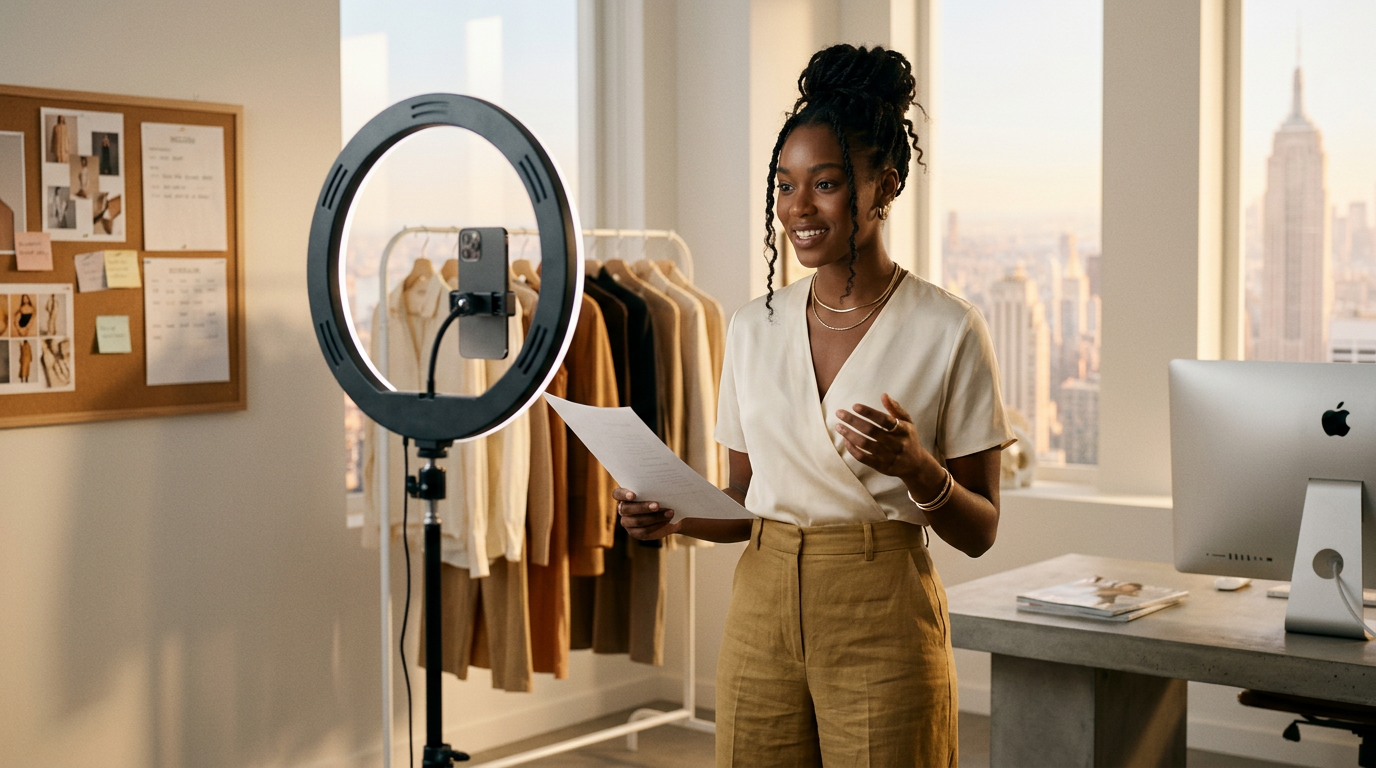
Your video environment speaks volumes about your professionalism. Position your camera at eye level using a tripod to avoid shaky, handheld footage. Record in a well-lit space where the light source is directly in front of you—never behind you, which creates shadows and silhouettes. Soft, natural daylight from a large window is ideal, but a high-quality LED ring light or softbox light works perfectly to ensure your features are bright and clear.
Choose a plain, solid-colored wall as your backdrop. White, light gray, or beige are the industry standards. Remove all background clutter, including picture frames, furniture, and door frames, to ensure the focus remains entirely on you.
2. The Look: Wardrobe and Styling
The goal of a self-tape is to present a clean slate. Casting directors and designers want to envision you in their specific designs. Therefore, avoid heavy makeup, complex hairstyles, or distracting outfits.
For example, imagine a scenario where a global luxury brand is casting for an upcoming fall runway show. A Black American woman preparing her digital casting should wear her natural hair styled cleanly away from her face, minimal ‘no-makeup’ makeup to let her rich skin tone and bone structure shine, and a simple black fitted bodysuit or a tank top paired with dark, slim-fit denim. This minimalist approach allows the casting team to easily visualize how she would fit into their upcoming collection.
3. The Execution: Slating and Posing
Start your video with a warm, authentic verbal slate. Look directly into the lens and state your name, height, current location, and agency representation. Speak clearly and confidently.
Next, show your profiles. Turn slowly to your left, hold for two seconds, then turn to your right, showing both sides of your face and body profile. Be sure to show the backs of your hands as well, as hand modeling is often a component of commercial beauty campaigns.
If the casting requires movement or a runway walk, step back so your entire body is in the frame. Walk confidently toward the camera, pose naturally, and step back. Keep your posture tall, relaxed, and professional throughout the entire process.
Technical Specifications and Submission Best Practices
Always read the casting brief carefully before hitting record. Different clients may have specific requirements regarding video orientation, length, and framing.
- Video Orientation: Standard digital castings are usually shot in vertical format (9:16) for modern social and mobile campaigns, but high-fashion and theatrical agencies may request horizontal format (16:9). Check the directions before filming.
- Length: Keep your video concise. Unless requested otherwise, a standard self-tape introduction and movement sequence should not exceed 60 seconds.
- File Naming: Always label your video files professionally. Use a clean format such as Firstname_Lastname_SelfTape.mp4. Avoid generic file names like IMG_8432.mov, which can easily be lost in a casting director’s inbox.
Partnering with a Premier Agency
Navigating the transition to digital-first castings requires guidance, constructive feedback, and industry connections. At Face Of Fashion Management, founded by Carla Hazel in New York City in 2006, we place a strong emphasis on preparing our talent for the realities of modern casting. We work closely with our models and designers to refine their digital presentation, ensuring that every self-tape submitted under our name represents the high standard of excellence, authenticity, and integrity our brand partners expect.
By mastering the technical and artistic elements of the digital casting, you expand your reach far beyond regional boundaries, positioning your talent in front of decision-makers worldwide.
Frequently asked questions
What should I wear for a modeling self-tape?
Wear simple, form-fitting clothing in neutral colors, such as a black bodysuit, a clean tank top, or a basic t-shirt paired with slim-fit jeans. Avoid busy patterns, logos, or heavy jewelry that distract from your natural features.
Do I need professional video equipment to record a digital casting?
No, a modern smartphone with a high-quality camera is fully sufficient. Use a stable tripod, record in high definition (1080p or 4K), and ensure your lighting is bright and even.
What is a 'slate' in a modeling video?
A slate is a brief verbal introduction at the beginning of your self-tape. You should look directly at the camera and clearly state your name, height, location, and your talent agency representation.
Should I wear makeup in my digital casting self-tape?
Keep makeup minimal and clean—often referred to as 'no-makeup' makeup. The goal is for casting directors and agencies to see your natural skin, bone structure, and authentic appearance.